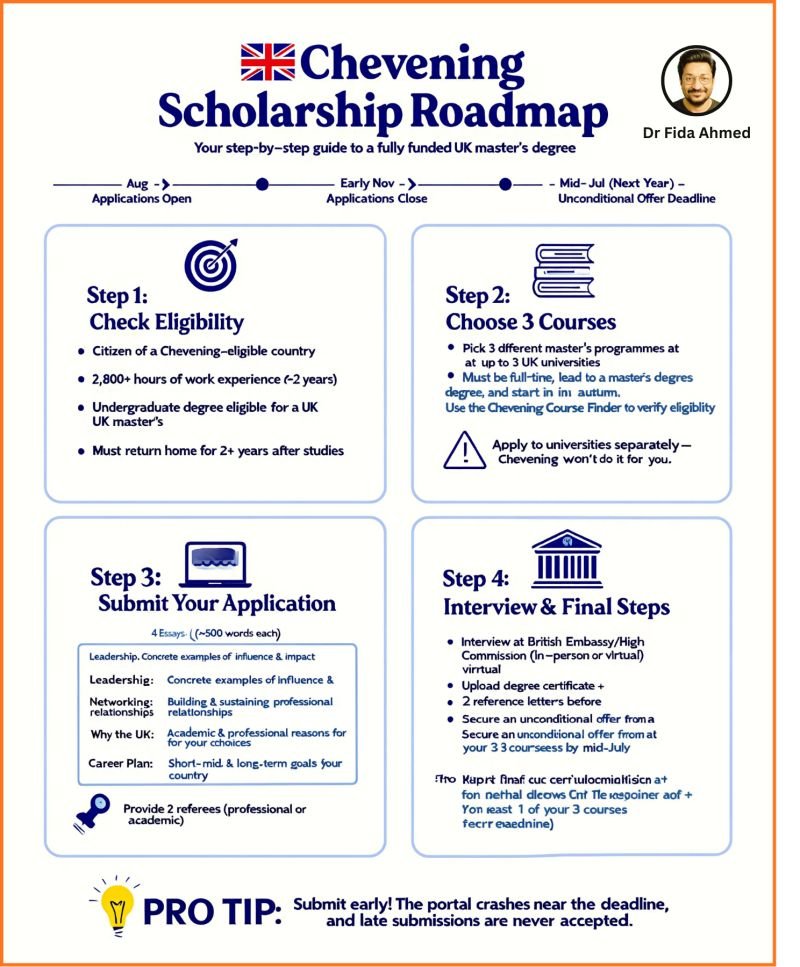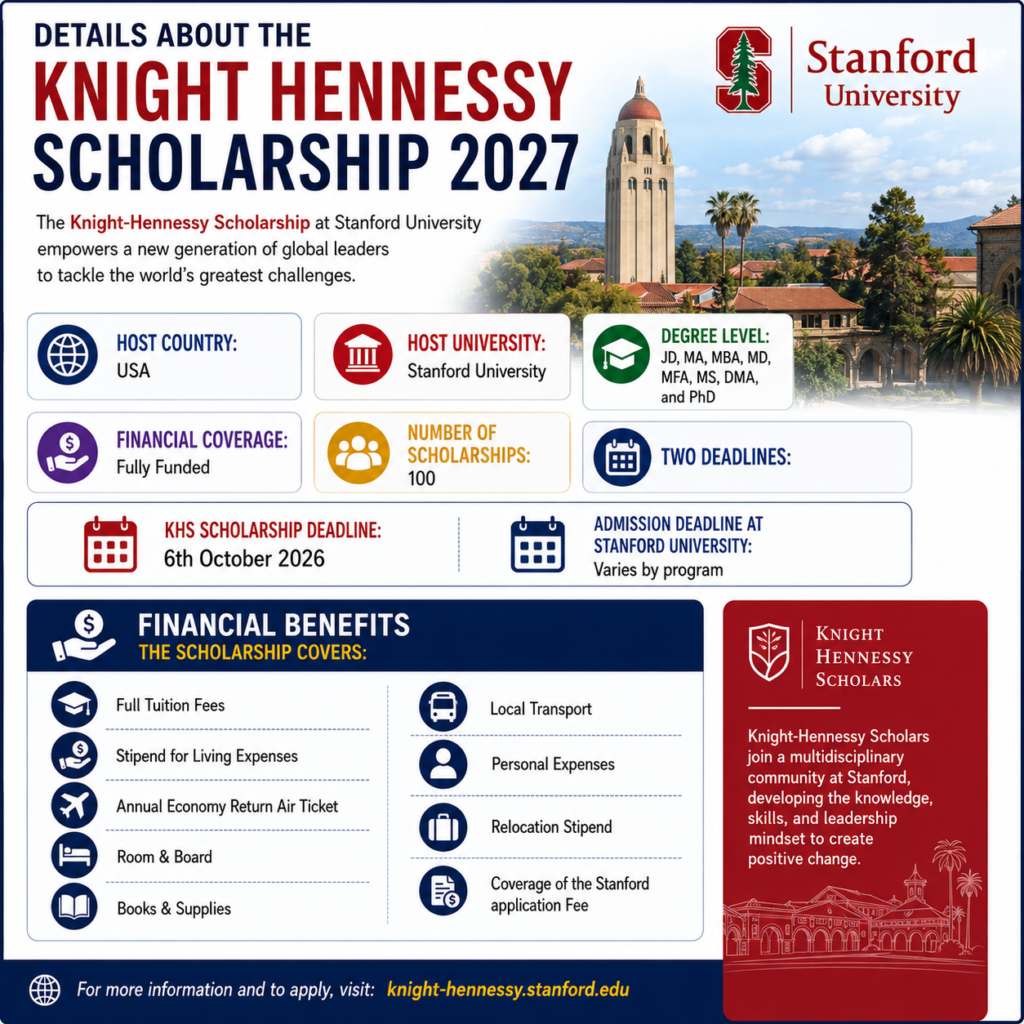
Winning a fully funded scholarship abroad requires more than academic excellence — it demands strategic planning, compelling narrative development, meticulous documentation, and a deeply authentic application that distinguishes you from thousands of equally qualified candidates. Here is your complete strategic guide. Every year, hundreds of millions of dollars in fully funded scholarship money — for universities in the USA, UK, Canada, Australia, Germany, Japan, Netherlands, France, and across the developed world — goes unclaimed.
Not because insufficient numbers of eligible African students exist. Not because the scholarships are inaccessible in principle. But because the eligible students who most deserve these opportunities never apply, or apply without the strategic preparation, the narrative sophistication, and the application quality that competitive scholarship selection requires.
This guide is for the Nigerian engineering graduate with a first-class degree who has never applied for Chevening because she assumed she wasn’t the right kind of candidate. It is for the Kenyan public health professional who doesn’t know that Australia Awards specifically seeks professionals exactly like him. It is for the Ghanaian medical researcher who has the academic credentials and the community leadership record to win a Fulbright but has never started the application because the process seems overwhelming. And it is for every African student reading this who has spent years knowing that international education could transform their career and their community — and has spent those years not applying because no one showed them how.
This guide shows you exactly how. Every step. Every strategy. Every common mistake to avoid. And every insight from the perspective of scholarship selection committee members who have assessed thousands of applications and know precisely what wins and what fails.
Understanding What Scholarship Selection Committees Are Looking For
Before discussing how to apply, you must understand what scholarship committees are actually evaluating. The most common mistake in scholarship applications is writing about yourself — your academic achievement, your personal qualities, your aspirations — without understanding that scholarship committees are not primarily evaluating who you are. They are evaluating who you will become, what you will do with your education, and why their scholarship investment in you will generate returns that justify the extraordinary financial commitment they are making.
Every major international scholarship programme — Fulbright, Chevening, Australia Awards, Commonwealth, Gates Cambridge, DAAD, Vanier, Rhodes — has an explicit theory of change: the belief that investing in outstanding international students from developing countries will generate development outcomes that benefit those students’ communities and countries. Your application succeeds when it convincingly demonstrates that you are exactly the person through whom that theory of change will operate — that your specific proposed education, combined with your specific existing experience and your specific post-education plans, will generate the specific development impact the scholarship exists to create.
This is a fundamental reframing of how most applicants approach scholarship applications. Most applicants think: “I need to explain how good I am so the committee will give me money for education.” The winning applicant thinks: “I need to explain why investing in my education will achieve the outcomes this scholarship programme exists to create, and why I am the specific person through whom those outcomes will most efficiently be achieved.”
Hold this reframing throughout every section of this guide.
Part 1 — Before You Write a Single Word
Step 1 — Conduct a Complete Personal Scholarship Audit
Before applying for any scholarship, systematically assess your current position against each scholarship’s eligibility criteria and competitive profile. Create a document covering:
Academic record: Your undergraduate GPA converted to the 4.0 scale used by most US and international scholarship systems; your rankings within your class if available; any academic prizes, distinctions, or special recognition; any published academic work.
Professional experience: Every position held (including internships, volunteer roles, and community work); specific responsibilities and outcomes achieved; professional achievements that are quantifiable.
Leadership record: Every leadership role — formal and informal; specific outcomes your leadership generated; teams or organisations you built or grew; decisions you made that had measurable impact.
Community engagement: Specific community contributions with measurable outcomes; social enterprises or projects founded or developed; community recognition received.
Research experience: Any research conducted; any publications, conference presentations, or research awards; supervisor relationships; specific research contributions.
Language scores: Current TOEFL/IELTS scores; target scores for your priority scholarships.
This audit tells you two things: where your application is currently competitive, and where gaps need to be addressed before your application is complete.
Step 2 — Identify Your Priority Scholarships and Align With Your Genuine Development Story
Research scholarship programmes relevant to your field, country, and career stage. Create a ranked list of five to ten scholarships for which you are genuinely eligible — not aspirationally eligible, but currently eligible given your actual academic record, work experience, and language scores.
The most important criterion in ranking these scholarships is not prestige or financial value — it is narrative fit. Which scholarships’ explicit values and development objectives most authentically connect to your genuine story, your real community experience, and your actual career goals?
Scholarship committees who have read thousands of applications can identify within the first paragraph whether an application is genuine or constructed. The student who genuinely spent three years building a community health education programme in their rural home area and wants to study public health to improve that programme is writing from a real place — and that authenticity is detectable. The student who invented a story of community engagement specifically to match the scholarship criteria is equally detectable — and immediately disqualifying.
Apply to scholarships whose development objectives genuinely connect to your real story. If your genuine story is about mathematics education in underserved schools — Chevening, DAAD, and Australia Awards are all appropriate targets. If your genuine story is about water sanitation engineering — Fulbright, Commonwealth, and University of Waterloo engineering fellowships are appropriate targets. If your genuine story is about wildlife conservation — Rhodes, Gates Cambridge, and Australia Awards conservation programmes are appropriate targets.
Step 3 — Close Your Language Score Gap
Most international scholarships require IELTS 6.5 or 7.0 (or TOEFL iBT 90+). Many competitive scholarships are won or lost at the language score stage — not because applicants from Anglophone Africa lack English proficiency, but because they underestimate the specific test-taking skills required for high IELTS/TOEFL scores and approach these examinations without preparation.
IELTS and TOEFL test specific skills: Academic reading speed, formal writing structure, listening note-taking, and structured speaking. Each of these can be significantly improved through targeted preparation — regardless of your general English proficiency level.
Recommended preparation: 8–12 weeks of dedicated IELTS/TOEFL preparation using official practice materials (British Council for IELTS; ETS official materials for TOEFL), supplemented by Cambridge IELTS practice test books (most widely used effective preparation resource).
Target score: Aim for IELTS 7.0 or 7.5 (above minimum) in all four skills. Scholarship applications with IELTS 7.5+ scores are measurably more competitive than applications meeting minimum requirements only.
Testing centres across Africa: IELTS test centres are available in Lagos, Abuja, Port Harcourt, Accra, Kumasi, Johannesburg, Cape Town, Nairobi, Harare, Addis Ababa, Kigali, Dar es Salaam, Cairo, Casablanca, and dozens of other African cities. TOEFL is available at Prometric centres across Africa.
Part 2 — Writing the Core Application Documents
Step 4 — The Personal Statement or Statement of Purpose — The Most Important Document
The personal statement or statement of purpose is the single most important document in every scholarship application — and it is the document that most applicants handle least effectively. Here is the framework that produces winning scholarship personal statements:
Paragraph 1 — The Specific Problem Hook: Begin not with yourself, but with a specific, concrete, vivid description of a real problem or challenge you have observed or experienced in your community, country, or field. Not “healthcare is a major challenge in Nigeria” (generic, tells the committee nothing). Instead: “In Kano State, where I worked for three years as a community health officer, I watched mothers choose between buying malaria medication and buying food for their families — because the nearest primary health centre was seventeen kilometres away and charged consultation fees that consumed two days of income.”
The specific problem hook accomplishes three things: it demonstrates real-world knowledge and observation; it establishes the stakes of your proposed education; and it draws the reader into your application emotionally and intellectually before you have said anything about yourself.
Paragraph 2 — Your Relevant Experience and What It Taught You: Describe your direct experience with the problem — not what you want to do in the future, but what you have already done and what you learned from doing it. This paragraph demonstrates that you are not an armchair theorist who has read about development challenges but a practitioner who has engaged with them in reality.
Paragraph 3 — The Specific Gap: Identify the specific knowledge, skill, or credential gap that prevents you from solving the problem more effectively. This is the academic need your proposed scholarship study addresses — stated as a specific gap rather than a general aspiration for education.
Paragraph 4 — Why This Programme, Why This University, Why This Scholarship: Explain specifically — not generally — why the proposed master’s programme or doctoral programme at the specific university addresses your identified gap. Reference specific courses, specific professors, specific research centres, specific methodologies that the programme offers and that you need. Generic statements like “Oxford has world-class faculty” tell the committee nothing. Specific statements like “Professor Sarah Thompson’s research on community health systems in West Africa, specifically her work on community health worker programme effectiveness, directly addresses the evaluation gap I identified in my three years of field work” demonstrate that you have done your research and that your choice of programme is purposeful.
Paragraph 5 — Post-Scholarship Plans: Describe concretely and specifically what you will do after your scholarship — not aspirationally but concretely. Where will you work? Which specific organisation? In which specific role? On which specific problem? How does that role directly apply what you will learn? The more concrete and specific your post-scholarship plan, the more convincing your return commitment and the more compelling your application.
Step 5 — The Leadership Essay — Your Most Common Application Mistake
Leadership essays are the most consistently weak component of African scholarship applications — not because African applicants lack leadership experience, but because they describe leadership activity rather than leadership impact.
“I was the president of the student union for two years” describes activity. “As student union president, I advocated for the reduction of examination fees that were excluding 15% of enrolled students from sitting end-of-year examinations — through a six-month campaign involving documentation of student financial hardship cases, three presentations to university management, and ultimately a 30% reduction in examination fees that allowed 340 students who would otherwise have been excluded to sit their examinations” describes leadership impact.
The winning formula for every leadership claim in every scholarship application: Role + Action + Obstacle + Outcome + Impact.
Not: “I volunteered with a local NGO.”
But: “I coordinated a community malaria prevention campaign (Role) — organising 45 community health volunteers across three local government areas over six months (Action) despite significant vaccine hesitancy and traditional healer opposition in the target communities (Obstacle) — achieving 78% bednet coverage across 12,000 households compared to 31% coverage in the control communities (Outcome), contributing to a 44% reduction in malaria-related primary care visits in the targeted areas in the following dry season (Impact).”
The specificity of this level of leadership documentation is uncomfortable for many African applicants who are culturally modest about self-promotion. Scholarship applications are not the context for modesty. They are the context for demonstrating measurable impact as compellingly and specifically as you can.
Step 6 — Securing Exceptional Reference Letters
Reference letters are the one part of your application you do not write yourself — but they are among the most important determinants of your application’s success. Weak reference letters are a primary reason why strong candidates fail to receive scholarship offers.
The most important thing about reference letters is choosing referees who can speak to specific, relevant, recent experience of your work at the highest standard they have observed. The second most important thing is briefing your referees thoroughly so they can write letters that complement your personal statement rather than repeating it.
Ideal referee profile for scholarship applications: Academic supervisor or professor who has directly assessed your research or thesis work; professional supervisor who has directly managed your work; senior community leader or NGO director who has observed your community engagement. Referees should be able to speak to different dimensions of your application — not three academics or three employers, but a combination that together addresses academic excellence, professional capability, and leadership/community engagement.
How to brief your referees: Send each referee: your complete personal statement; a one-paragraph summary of what dimension of your work you would like them to address; specific examples of your work that you would find most valuable for them to reference; the scholarship’s stated selection criteria; and the deadline with at least four weeks of advance notice. A referee who understands exactly what the scholarship is looking for and has concrete examples of your relevant work to reference will write a dramatically more useful letter than one given only your CV and a polite request.
Step 7 — Building Your Research Proposal (For Doctoral and Research Scholarships)
Research scholarships — Gates Cambridge, Vanier, Humboldt, DAAD doctoral programmes, Commonwealth PhD scholarships — require a research proposal as a central application component. The research proposal for a scholarship application differs from an academic research proposal in one critical way: it must be written simultaneously for academic and lay audiences.
Scholarship selection committees typically include both academic specialists and generalist educated readers. Your research proposal must satisfy the specialist (demonstrating research rigour, literature familiarity, and methodological sophistication) while also being comprehensible and compelling to the generalist (demonstrating why this research matters, what problem it addresses, and what its practical implications might be).
Structure of a winning scholarship research proposal:
Title — Specific, indicating both the research subject and the analytical approach
Research problem and context — Why does this research matter? What gap does it address?
Research questions — Specifically worded, focused, and answerable
Literature review — Demonstrating familiarity with existing scholarship and identifying the gap your research addresses
Methodology — Specific, justified, and feasible within the scholarship period
Expected contributions — Both academic (theoretical or empirical) and practical (policy, practice, or community implications)
Timeline — Realistic and specific
Supervisor — Identified supervisor who has agreed to work with you (essential for most doctoral scholarship applications)
Part 3 — The Application Process
Step 8 — Create Your Application Calendar and Timeline
International scholarship deadlines are absolute — a late application is not considered. Create a comprehensive application calendar covering:
All priority scholarship deadlines (language test, national nomination, online application)
All university application deadlines (required for scholarships where university admission is prerequisite)
Reference letter request dates (minimum 4 weeks before scholarship deadline)
Language test dates (book test 6–8 weeks before scholarship deadline to allow for potential resit)
Draft essay completion dates (minimum 3 weeks before deadline)
Review and feedback dates (minimum 2 weeks before deadline)
Final submission date (minimum 1 week before official deadline)
Work backwards from every deadline. Missing a scholarship deadline because you started preparation too late is the most common and most avoidable reason that qualified African students fail to receive scholarships they deserved.
Step 9 — Get Your Application Reviewed
No application should be submitted without review by at least two trusted readers — ideally including at least one person who has experience with scholarship applications or international academic writing. University writing centres, alumni networks, and online scholarship communities provide review opportunities.
Specifically ask reviewers to assess: Is the development narrative compelling and specific? Is the leadership evidence specific and impact-focused? Is the post-scholarship plan concrete and credible? Is the writing clear, grammatically accurate, and professionally formal? Is the proposed university and programme choice specific and well-justified?
Incorporate feedback ruthlessly. The version of your application that has been reviewed and revised three times is dramatically stronger than the first draft — and scholarship success often comes down to the difference between a good first draft and an excellent final application.
Step 10 — Prepare for the Scholarship Interview
Many major scholarships — Chevening, Rhodes, Gates Cambridge, Fulbright — include an interview stage for shortlisted candidates. Scholarship interviews are conducted by embassy officers, scholarship alumni, academic assessors, and foundation representatives — and they assess precisely the same qualities that the written application demonstrates: intellectual curiosity, leadership authenticity, development commitment, and personal integrity.
Interview preparation essentials:
Know your application document thoroughly — every claim you have made in your personal statement must be something you can speak about in detail and with genuine engagement
Prepare for intellectual discussion about your proposed field of study — demonstrating that you can engage with ideas about your subject beyond surface level
Prepare for scrutiny of your return commitment — be ready to explain concretely and compellingly why you intend to return home and what specifically you will do
Practice speaking clearly, concisely, and without filler language — scholarship interviews move quickly and clarity of expression matters
Common Mistakes That Eliminate Otherwise Strong Applications
Vague development narrative: “I want to contribute to my country’s development” without specifying how, in which sector, through which organisation, and with which specific skills you will gain. Always be specific.
Generic university selection: “Oxford is a world-class university” without explaining why Oxford’s specific programme is the right match for your specific research question or career goal. Always be specific.
Unquantified leadership claims: “I was involved in a community project” without specifying what you did, what the outcome was, and what difference it made. Always quantify impact.
Ignoring the return commitment: Applications that focus entirely on what you will gain from the scholarship and say little or nothing convincing about what you will do upon return. Scholarship committees funding international development are intensely focused on return commitment and post-scholarship impact.
Applying to inappropriate scholarships: Applying for Chevening with only one year of work experience (minimum is two years); applying for Australia Awards for courses without development relevance; applying for Rhodes without evidence of leadership and community service. Read eligibility criteria exhaustively before investing application time.
Conclusion
Winning a fully funded scholarship abroad in 2026 is not a matter of luck, privilege, or attending the right secondary school. It is a matter of strategic preparation, authentic narrative development, specific and quantified evidence of leadership and community impact, and meticulous application execution executed with enough lead time to complete every step at the highest possible quality.
The Fulbright, Chevening, Australia Awards, Commonwealth, Gates Cambridge, Rhodes, DAAD, Vanier, and dozens of other fully funded scholarship programmes collectively represent hundreds of millions of dollars annually in education funding reserved specifically for outstanding students from developing countries — including you.
Start your scholarship audit today. Identify your priority programmes. Book your IELTS or TOEFL examination. Write the first draft of your personal statement this week. Request your reference letters this month. And submit your first competitive scholarship application in this cycle — because the only application that cannot win is the one that was never submitted.
Your fully funded scholarship to study in the USA, UK, Canada, Australia, Germany, or another world-class destination is not a fantasy. It is a strategic goal with a clear pathway. This guide has shown you the pathway. Now it is time to walk it.